Bleeding after birth (lochia): what’s normal and when to get help
Share

Bleeding after birth surprises almost everyone. It happens after every kind of birth, including a caesarean, and it’s usually heavier and lasts longer than people expect. Here’s what’s normal, what helps, and the signs that mean you shouldn’t wait.
What lochia is
The bleeding after birth is called lochia. It’s your womb shedding its lining as it heals. Many mothers are shocked by how many maternity pads they get through in the first days.
How it usually changes
- The first few days: heavy and bright red, sometimes with small clots.
- After the first week or so: pinkish-brown, then lighter.
- Towards the end: cream or yellowish. It can last up to around six weeks.
It may get heavier for a while when you’re more active or feeding. Cramps like period pains (after-pains) are also common in the first days, often stronger during breastfeeding and after second and later babies. They usually ease within a few days.
What helps
- Stock up on maternity pads before the birth, more than you think you’ll need.
- Use pads rather than tampons or cups until your postnatal check, as these can introduce infection.
- Change pads often and keep the area clean and dry.
- Treat the first two weeks as recovery time. Doing less really does help.
Call your emergency number if you have…
- Sudden or very heavy bleeding, for example soaking more than one pad an hour, especially if you feel faint, dizzy or your heart is racing
- Chest pain, or sudden breathlessness
- A seizure, slurred speech, confusion, or weakness in your arms or legs
- A sudden severe headache, or loss of vision or double vision
That’s 999 in the UK, 911 in the US and Canada, 000 in Australia, 111 in New Zealand and 112 in most of Europe.
Contact your midwife or doctor the same day if you have…
- Bleeding that increases, or large clots
- A high temperature (38°C / 100.4°F or above), shivering, or feeling very unwell
- Tummy pain that gets worse or doesn’t ease with pain relief, or smelly discharge
- A headache that won’t go away, blurred vision or flashing lights (pre-eclampsia can happen after birth)
- Pain, swelling, warmth or redness in one leg, usually the calf
- A red, hot or oozing caesarean wound or stitches
Trust your instincts. If something feels wrong, ask. You will never be wasting anyone’s time.
At your postnatal check
Mention bleeding that has come back, got heavier, or still hasn’t stopped. It’s one of the things worth raising at your check-up, usually around six to eight weeks in the UK.
Sources: NHS hospital patient leaflets on blood loss after birth and signs of serious illness after birth.
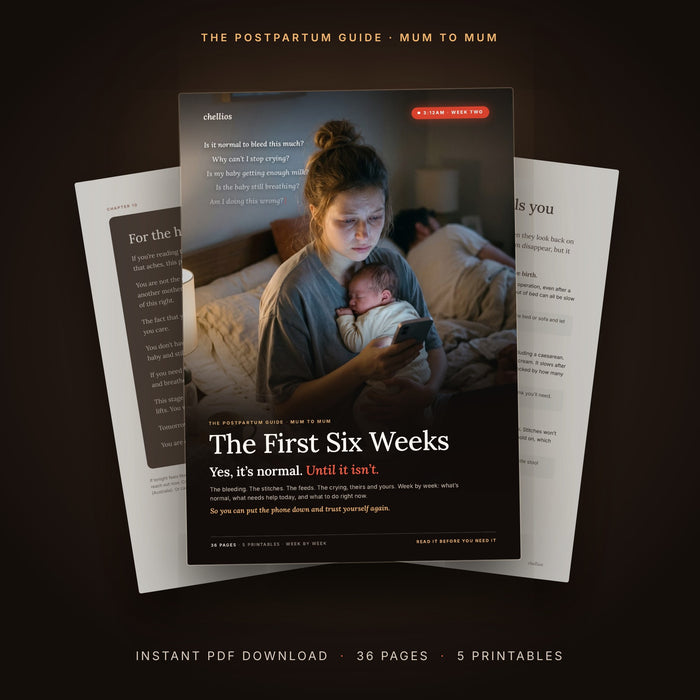
The First Six Weeks is our honest, gentle guide to life after birth: a week-by-week map, what’s normal for your body and mind, words to borrow when you need help, and five printable pages. Take a look inside the guide.
This article is general information and emotional support, not medical advice. If you’re worried about yourself or your baby, contact your midwife, health visitor or doctor. In an emergency, call your local emergency number.