Your body after birth: tummy gap, pelvic floor and getting back to exercise
Share

Your body has done something enormous. Healing takes time, usually more than six weeks, and there’s no prize for rushing. Here’s what’s normal, and a gentle way back to moving.
The tummy gap (diastasis recti)
During pregnancy, the two long muscles down the front of your tummy stretch apart to make room for your baby. After birth, a gap of one or two fingers’ width between them is common and normal, and it often closes by itself over the first eight weeks or so.
- Get up the easy way. Roll onto your side and push up with your arms, rather than sitting straight up.
- Avoid sit-ups and crunches in the early weeks, and anything that makes your tummy dome or bulge.
- Ask at your postnatal check if your tummy still bulges or feels weak, especially when you sit up. A women’s health physiotherapist can help.
Your pelvic floor
Pregnancy and birth stretch the muscles that support your bladder, womb and bowel, however your baby was born. Leaking a little when you cough or sneeze is common at first.
A simple routine: squeeze and lift as if you’re stopping yourself passing wind and holding in a wee, then relax fully. Do a few quick squeezes, then a few slow ones held for a few seconds, building up over the weeks. Aim for several sets a day, and keep going for at least three months.
If leaking, heaviness or a dragging feeling doesn’t improve, ask your GP or health visitor about a referral to a women’s health physiotherapist. You don’t have to wait until six weeks.
A gentle timeline back to exercise
Everyone recovers differently, and a caesarean or a difficult birth may mean going slower. As a rough guide from NHS physiotherapy teams:
- The first weeks: pelvic floor exercises, gentle walking, and plenty of rest.
- After your postnatal check (around 6 to 8 weeks): build up low-impact activity such as brisk walking, cycling on a static bike, and postnatal yoga or Pilates, if you feel ready.
- Swimming: wait until 7 days after your bleeding has stopped, and until any stitches or wounds have healed.
- Running, jumping and high-impact exercise: many NHS physiotherapy services suggest waiting until at least 12 weeks, and building core and pelvic floor strength first.
If you have pain, leaking, a heavy feeling, or bleeding that gets heavier or turns red again after exercise, you’re probably doing too much. Ease off and speak to your GP or physiotherapist.
Be patient with yourself
Many NHS teams say full recovery can take up to a year. Your body isn’t behind. It’s healing.
Sources: NHS hospital physiotherapy leaflets on separation of the abdominal muscles, pelvic floor exercises and returning to exercise after childbirth; NCT.
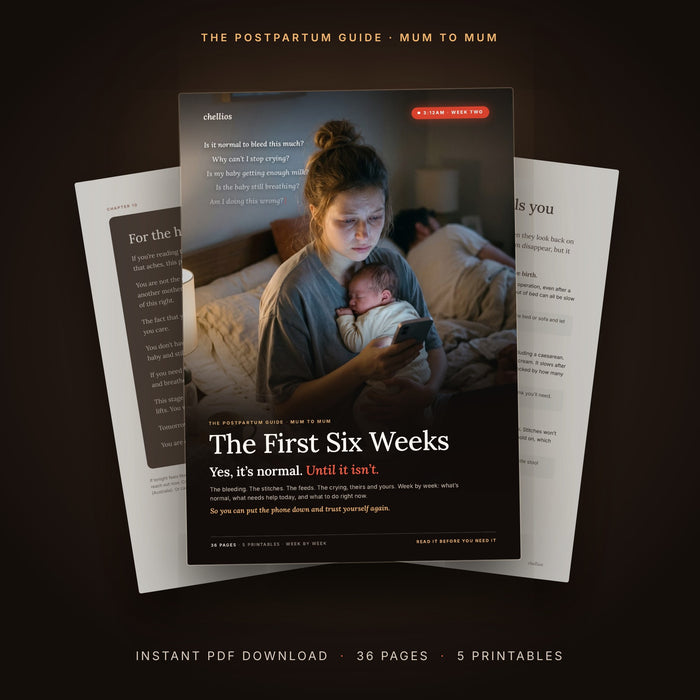
The First Six Weeks covers healing after birth week by week, including caesarean recovery, what to ask at your postnatal check, and a printable list of check-up questions. Take a look inside the guide.
This article is general information, not medical advice. Follow your own care team’s guidance, especially after a caesarean or complicated birth.