How to ask for help after having a baby (with words you can borrow)
Share

“Let me know if you need anything.” People mean it. But it rarely turns into real help, because it leaves the hardest part, working out what to ask for, to the person with the least energy. A specific request almost always works better.
Make a list before you need it
Before the birth, or now, write a short list of jobs people can pick from, and stick it on the fridge. Ideas:
- Hold the baby so I can shower, nap or eat with both hands
- Make a cup of tea or a snack (for me and for you)
- Wash up, or put a load of washing on
- Bring or cook a meal, or do a quick food shop
- Take out the bins or recycling
- Take the baby for a walk for an hour
- Walk the dog, or play with an older child
- Tell me I’m doing a good job
If people ask what they can bring, the answer is food.
A few gentle house rules for visitors
- Please wash your hands when you arrive, and stay away if you’re unwell.
- Short visits are perfect. Please don’t be offended if we need to rest.
- No kissing the baby’s face for now, please.
Many mothers say their biggest regret was letting too many people come too soon. The visits they remember most fondly weren’t chatty ones. They were the times someone simply held the baby while they had a bath.
Words you can borrow
To a friend who offered
“Thank you so much for offering. What would really help this week is a meal we can heat up. Could you drop one round on Thursday? No need to stay.”
To someone who wants to visit
“We’d love you to meet the baby. We’re keeping visits short while I recover, so could you come for about half an hour on Saturday afternoon? If you can bring milk and bread on the way, you’ll be my hero.”
When you need people to leave
“I’ve loved seeing you. I’m starting to fade, so I’m going to feed the baby and have a lie down now.”
When advice isn’t helping
“Thank you, I know you mean well. We’re following what our midwife and health visitor have suggested for now.”
Asking your partner
Mothers often say they needed to hear they were doing well, and didn’t know how to ask. Asking directly tends to work far better than hoping your partner will guess:
“I’m not upset with you. I’m just running on empty. Could you take the baby for the next hour so I can sleep? And can you tell me I’m doing okay? I really need to hear it right now.”
Asking professionals
Your midwife, health visitor and GP are there for you as well as your baby. Be honest at appointments: they have heard it all before. If you feel brushed off, you could say:
“I understand this might be common, but it doesn’t feel right to me, and it’s affecting how I’m managing. Could you examine me, or refer me to someone who can look into it?”
If you’re on your own
If you don’t have a partner or family nearby, you are not without options. Tell your health visitor early so they know to check in more. Local baby groups, community and family centres, and parent support charities can be a lifeline. Even one regular outing a week can ease the isolation.
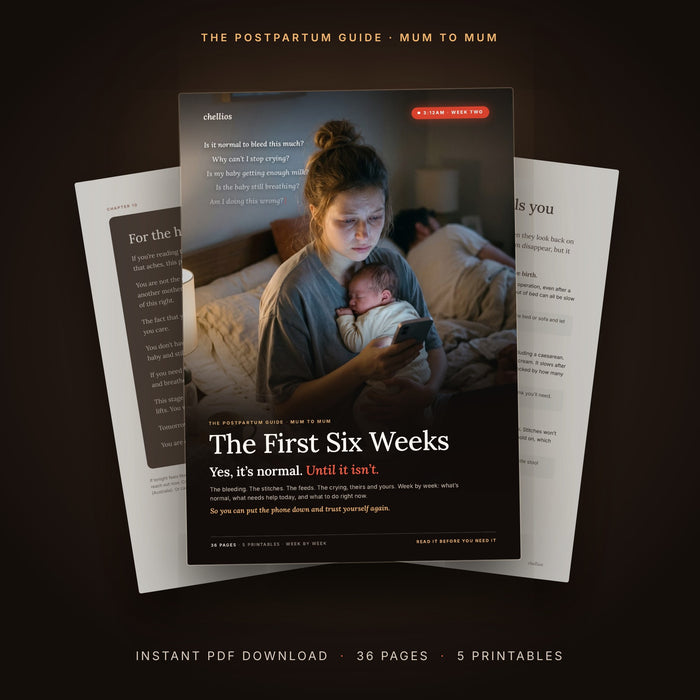
The First Six Weeks is our honest, gentle guide to life after birth: a week-by-week map, what’s normal for your body and mind, words to borrow when you need help, and five printable pages, including a “How you can help” page for the fridge. Take a look inside the guide.
This article is general information and emotional support, not medical advice. If you’re worried about yourself or your baby, contact your midwife, health visitor or doctor. In an emergency, call your local emergency number.