Your 6-week postnatal check: what happens and questions to ask
Share

In the weeks after birth, most mothers are offered a check-up of their own. In the UK it’s usually with your GP around six to eight weeks. In other countries it may be earlier, or with your midwife, obstetrician or family doctor. However it works where you live, it’s your appointment, about your recovery and wellbeing, not just your baby’s.
What usually happens
Your doctor or midwife will usually ask how you’re feeling, physically and emotionally. They may check your blood pressure, your stitches or caesarean wound if needed, and how your body is recovering. They’ll usually ask about bleeding, your pelvic floor, bladder and bowels, and contraception. Your baby normally has a separate check around the same time.
It’s also a good moment to be honest about your mental health. Many doctors are now encouraged to ask new mothers about their wellbeing, but you can bring it up first.
Questions worth bringing
Your body
- Bleeding that has come back, got heavier, or still hasn’t stopped
- Pain: stitches, scar, back, pelvis, or during sex
- Leaking urine, wind or poo, or a heavy, dragging feeling
- A tummy that still bulges or feels weak (ask about abdominal separation)
Your mind, and what’s next
- Low mood, anxiety, or thoughts that frighten you
- Difficult memories of the birth that keep coming back
- Feeding problems, or worries about your milk supply
- Contraception, and any medication you’re taking while breastfeeding
- When it’s safe to return to exercise, driving or work
Write it down before you go
It’s very easy to forget everything the moment you sit down with a baby in your arms. Jot your questions in your phone or on paper a few days before, and take them with you. It also helps to note how you’re feeling physically and emotionally in a sentence or two, so you don’t have to find the words on the spot.
If you feel brushed off
If something doesn’t feel right and you’re told it’s normal, you’re allowed to ask again. You could say:
“I understand this might be common, but it doesn’t feel right to me, and it’s affecting how I’m managing. Could you examine me, or refer me to someone who can look into it?”
You will never be wasting anyone’s time.
You don’t have to wait six weeks
The check-up is a milestone, not a gate. If leaking, heaviness or a dragging feeling isn’t improving, ask your GP or health visitor about a referral to a women’s health physiotherapist sooner. And if you have a high temperature, worsening tummy pain, smelly discharge, increasing bleeding or large clots, a red or oozing wound, or pain, swelling or redness in one leg, contact your midwife or doctor the same day.
If the birth was difficult
If your birth was frightening or didn’t go as planned, you may find yourself replaying it, feeling numb, or getting anxious about reminders. Many mothers say it helped to talk it through. Some hospitals offer a “birth reflections” or debrief service where you can go through your notes with a midwife. Ask your GP, midwife or health visitor.
Sources: NHS hospital patient leaflets on signs of serious illness after birth, blood loss after birth and pelvic floor exercises.
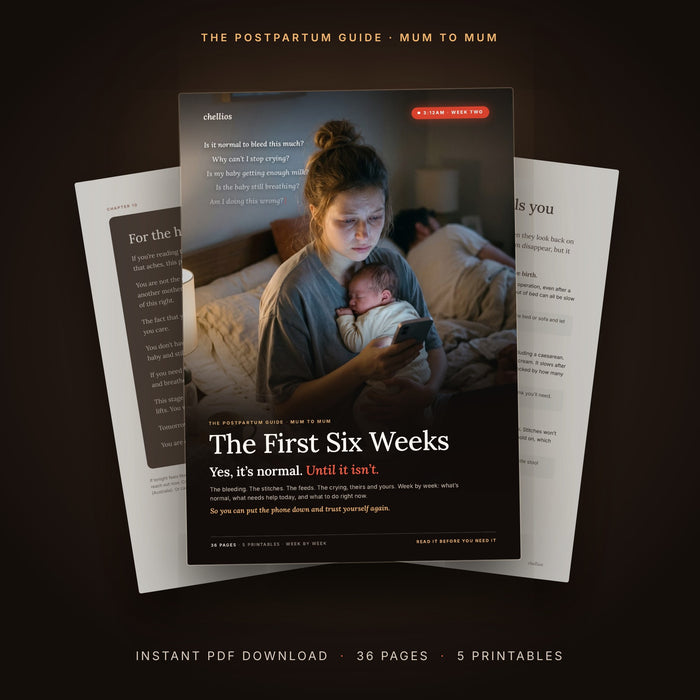
The First Six Weeks is our honest, gentle guide to life after birth: a week-by-week map, what’s normal for your body and mind, words to borrow when you need help, and five printable pages. Take a look inside the guide.
This article is general information and emotional support, not medical advice. If you’re worried about yourself or your baby, contact your midwife, health visitor or doctor. In an emergency, call your local emergency number.